
Why Couples Stop Talking Long Before They Separate
Most marriages do not end with a dramatic argument, an affair, or a sudden announcement that someone is done.
They end quietly.
Or more accurately, they begin breaking quietly long before anyone uses the word separation.
By the time couples finally stop talking in any meaningful way, the damage has often been building for months or even years. What makes this especially painful is that many couples still live together, raise children together, and function outwardly as a family while feeling increasingly disconnected on the inside.
If you are reading this, there is a good chance you feel that distance. You may not be fighting constantly. You may not even be arguing at all. But something feels off. Conversations feel shallow. Important topics get avoided. You may feel like you are walking on eggshells or like it is easier to stay quiet than risk another cold reaction or tense exchange. Free Help for Spouses Who Feel Alone in the Marriage Many people quietly try everything they can before asking for guidance. This free mini-course explains how marriages often shift into one-sided effort and what you can do without chasing, begging, or creating pressure. If you want clear guidance without judgment or clichés, you can start here.
This article is about why that happens, what it actually means, and why silence is often the most dangerous phase of a marriage.
Silence Is Not Peace
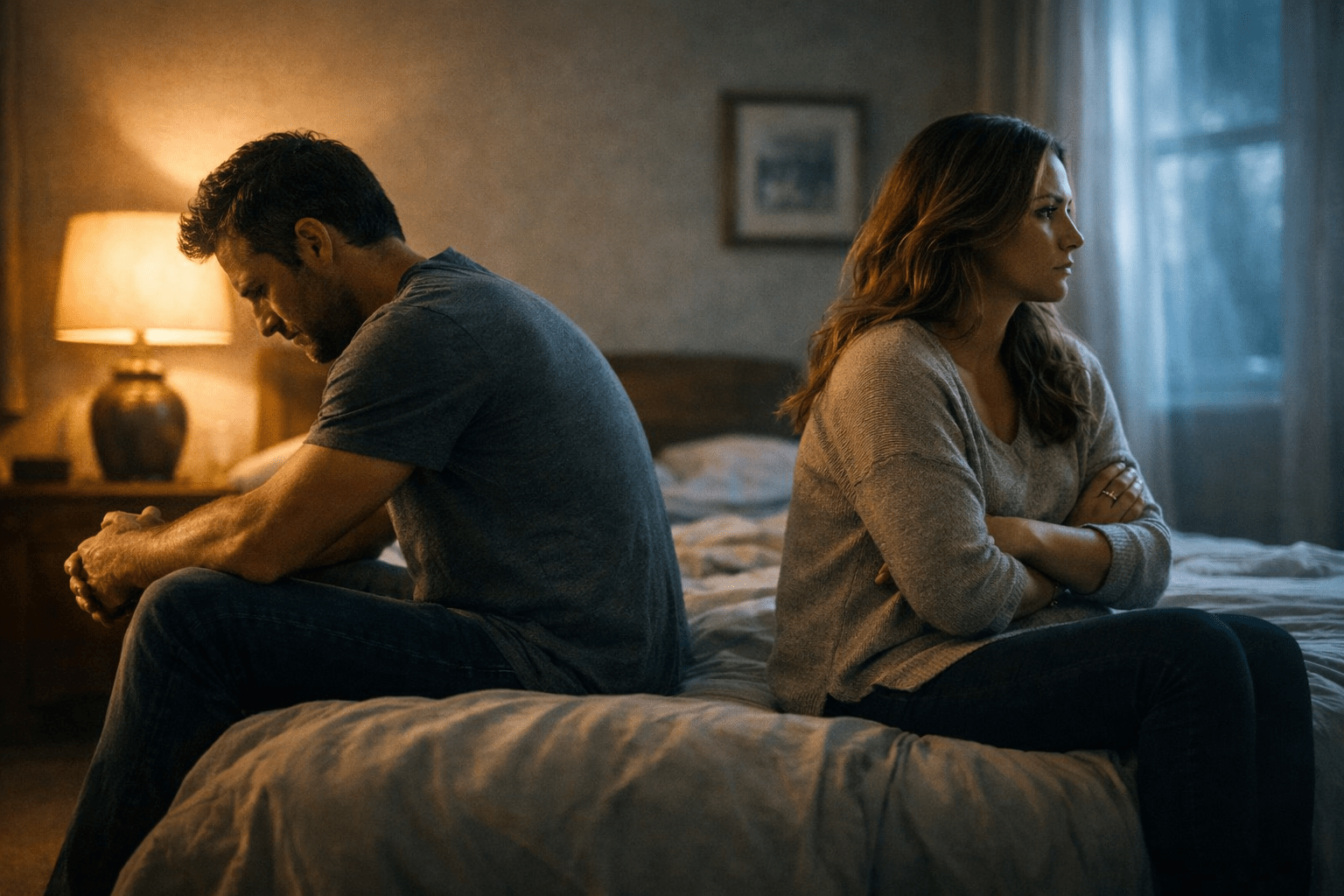
One of the biggest misunderstandings in marriage is assuming that fewer arguments mean things are improving.
In reality, many couples stop talking because arguing feels pointless, exhausting, or unsafe emotionally. Over time, silence becomes a coping strategy.
Instead of saying what they feel, one or both spouses begin editing themselves. They keep thoughts to themselves. They stop sharing frustrations. They stop asking questions that might lead to uncomfortable answers.
On the surface, this can look like maturity or calm. But underneath, it is often resignation.
Silence in a marriage is rarely neutral. It usually means something important is being withheld.
Couples Stop Talking When They Feel Unheard
One of the most common reasons couples stop talking is repeated emotional dismissal. Free Help for Spouses Who Feel Alone in the Marriage Many people quietly try everything they can before asking for guidance. This free mini-course explains how marriages often shift into one-sided effort and what you can do without chasing, begging, or creating pressure. If you want clear guidance without judgment or clichés, you can start here.
This does not always show up as outright cruelty or yelling. It often shows up in subtler ways.
A spouse shares something that matters to them and gets brushed off. Or the response is logical but emotionally cold. Or the conversation turns into advice instead of understanding. Over time, the person sharing begins to feel foolish for bringing things up at all.
After enough of these moments, the mind learns a lesson. Talking does not lead to closeness. Talking leads to frustration.
So silence feels safer.
This is not because the person no longer cares. It is often because they care deeply and do not want to feel rejected again.
Resentment Replaces Conversation
When communication stops, resentment does not.
Resentment grows quietly in the background. It shows up as irritability, sarcasm, emotional distance, or indifference. It often gets misinterpreted as a personality change or loss of attraction.
In reality, resentment is unresolved pain.
When someone feels consistently overlooked or unappreciated, they begin keeping score. Each disappointment adds to an internal ledger. Over time, even small issues feel heavy because they are carrying the weight of everything that came before.
At that point, talking feels useless. The conversation feels too big, too loaded, or too late.
So people stop trying.
Why Couples Avoid Hard Conversations
Many couples stop talking because they are afraid of what honest conversation might uncover.
They worry that if they say how unhappy they really feel, it will trigger a reaction they cannot control. Maybe their spouse will shut down. Maybe they will get angry. Maybe it will confirm a fear they have been avoiding.
So instead of risking that moment, they keep things light. They talk about logistics, schedules, kids, work, or surface level topics. They avoid the emotional core of the relationship.
This creates the illusion of communication while intimacy quietly fades.
Emotional Withdrawal Is Often Misread
When one spouse stops talking, the other often interprets it as lack of love or lack of effort.
But emotional withdrawal is usually a sign of self protection.
Many people withdraw because they feel emotionally exposed without feeling emotionally supported. Over time, they learn to survive by pulling inward.
Unfortunately, withdrawal tends to trigger more withdrawal. One person goes quiet. The other feels rejected. That rejection leads to defensiveness or disengagement. And the cycle deepens.
Eventually, both people feel alone in the same marriage.
The Danger of Getting Used to Distance
One of the most dangerous phases in a marriage is when distance becomes normal.
At first, the silence feels uncomfortable. But over time, it starts to feel familiar. You stop expecting connection. You stop initiating conversations. You stop reaching out emotionally.
That is when the relationship becomes vulnerable.
When couples get used to distance, they lose the emotional muscle required to repair it. Reconnection starts to feel awkward or forced. Even kind gestures can feel suspicious.
At that point, the marriage may look stable from the outside, but it is emotionally fragile.
Why Silence Often Comes Before Separation
Most separations do not begin with anger. They begin with emotional detachment.
By the time someone says they are done, they often feel exhausted rather than angry. They may have already grieved the relationship internally. They may feel relief at the thought of no longer trying.
This is why separation can feel sudden to one spouse and inevitable to the other.
The talking stopped long before the leaving began.
What Silence Is Really Asking For
Silence in a marriage is not a lack of desire for connection. It is usually a signal that connection feels risky.
Underneath the quiet, there is often a longing to be understood without being dismissed, corrected, or minimized. There is a desire to feel emotionally safe again.
When couples stop talking, it is rarely because they have nothing to say. It is because they do not believe their words will matter.
What You Can Do If You Feel the Distance
The instinct when a marriage goes quiet is to push harder or withdraw further.
Neither usually helps.
What matters most is restoring emotional safety. That does not happen through speeches, ultimatums, or forcing conversations. It happens through consistency, calm presence, and a willingness to listen without trying to fix or defend.
This is difficult work, especially when you feel hurt or ignored. But it is often the difference between a marriage that stalls and one that slowly comes back to life.
Why Timing Matters More Than Words
Many couples believe the right words will fix the problem. In reality, timing and emotional readiness matter more.
Trying to have deep conversations when emotions are raw often backfires. Pushing for answers before trust is rebuilt can increase withdrawal.
Sometimes the most powerful step is creating space for connection to feel possible again rather than forcing it.
When Distance Has Been Building for a Long Time
If the silence has been there for months or years, it is important to be realistic.
Reconnection takes patience. It requires undoing habits that developed over time. It requires resisting the urge to rush emotional repair.
But it is possible.
Many marriages that feel hopeless are not broken. They are stalled.
The key is understanding what caused the silence in the first place and addressing that pattern rather than just the symptom.
Why Guidance Helps at This Stage
This phase of a marriage is often where couples feel stuck.
They know something is wrong, but they do not know how to talk about it without making things worse. They feel like they are guessing, reacting, or walking on eggshells.
This is where structured guidance can make a difference.
Not because someone needs to tell you how to feel, but because having a clear framework helps you respond instead of react. It helps you rebuild connection without escalating tension.
A Final Thought
If you are worried because you and your spouse are not talking the way you used to, that concern matters.
Silence is not the absence of care. It is often the presence of unspoken pain.
The good news is that recognizing the silence is the first step toward changing it. Many marriages begin healing not when people finally say everything they feel, but when they learn how to make emotional connection feel safe again.
If you want help understanding what stage your marriage is in and what steps actually help at this point, I have created structured resources that walk through this process carefully and realistically. They are designed for people who want to slow things down, reduce emotional damage, and give their marriage a real chance to recover.
You do not have to guess your way through this.
And you do not have to stay stuck in silence.
If what you are experiencing feels familiar, you are not alone, and you are not imagining it.
Distance in a marriage does not usually mean love is gone. It usually means something important stopped feeling safe to talk about.
I have put together a free mini-course for people who sense that quiet distance and want to understand what is happening beneath it, without pushing, panicking, or making things worse.
It walks you through how marriages drift, what actually brings emotional connection back, and what to do when talking feels risky but silence feels worse.
If you would like a clear starting point, you can access the free mini-course below.

Recent Comments